
In an abstract way the title fits that last couple weeks quite well. A role change at work, back and forth with Mildred’s engine crankshaft, fiddling around with the new 3D printer, outstanding deliveries and a trip to Northern Germany in the Mini – they somehow all could be summarized into too many moving parts right now. But one thing after another.
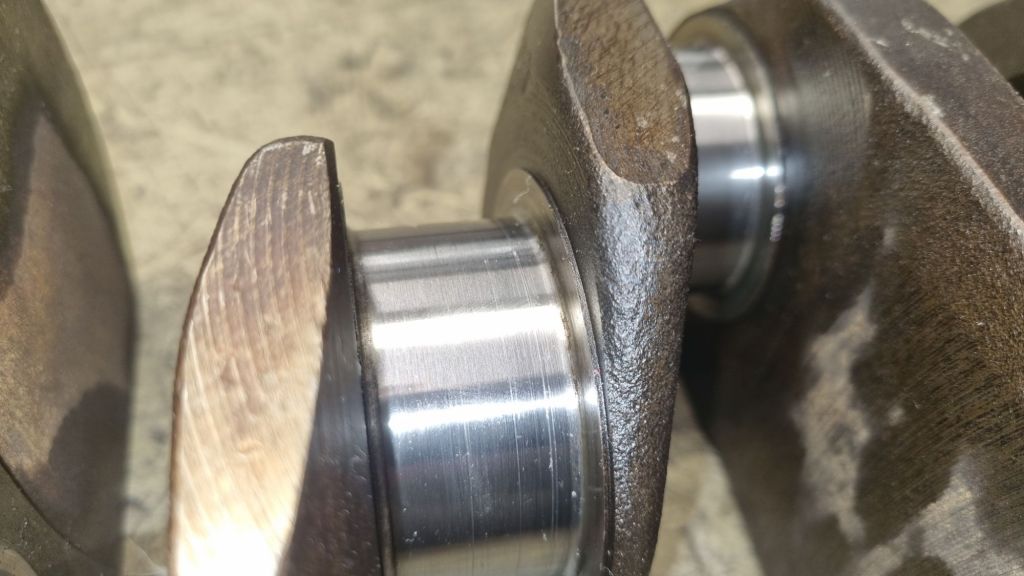
Just before Christmas I got Mildred’s 18V581 engine parts back. The crankshaft did not look right to me. Upon further inspection at KS Motortechnik in early January my suspicion was confirmed. The journals had uneven measurements between 0.010thou and 0.020thou undersize. Any good machine shop would have corrected this to 0.020thou undersize. When looking at the pictures from the dissambley in February 2024 – we realized that the crankshaft I got back is not even the one I had in my engine. According to the book from Peter Burgess from about 1971 to 1974 MGBs had a flatside crankshaft. These did not have the 12H1954 casting number on the side.
Fortunately, the crankshaft from my engine was found and supposedly reworked for the first undersize bearings. However, I immediately saw that it was just cleaned with a rag. As KS Motortechnik has more precise measuring tools I gave them a visit straight away. It only took a few minutes to point out a number of indicators that the crankshaft had not been touched. First and foremost the grooves on one of the main journals that we already saw last February. By now I would prefer to have the new machine job do the overall, but as I paid the invoice already – I had to first bring back the crank to Cologne. Legally they have the right to correct this instead of refunding me. We will see how this will develop but I am not expecting progress until March.
Moving on to the next item. In the bit sparetime I had I started on Mildred’s wiring loom. Two MTA fusebox and two MTA Mini relay modules will be pretty much the center of the new harness. They will be installed in a box welded into the right side footwell – just beneath the wiper motor where the loom is going from the inside to the engine bay. The majority of circuits will use relays. Additional cables and connectors have been ordered at Autosparks in the UK. I will pick up the order in February. While the loom towards the enginebay and rear have minimal additions and will pretty much look as the original – there is a lot going on behind the dashboard.
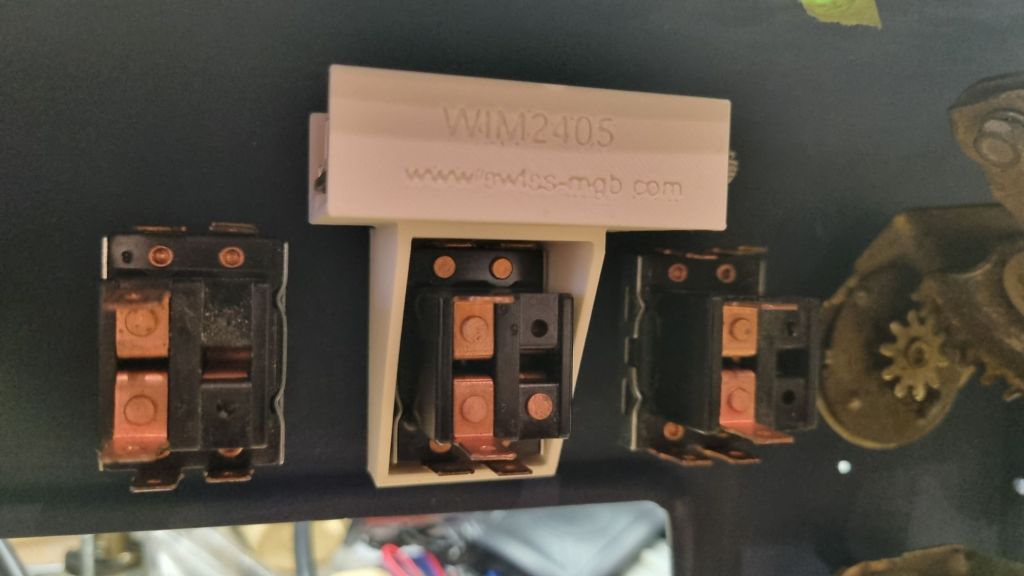
And this is where the new 3D printer comes in handy. The fusebox will get a proper cover and be hidden on the passenger footwell side. For this I spent a few evenings getting into FreeCad. My sketches are relatively simple still – but with every new attempt it becomes a bit easier. Behind the dashboard I designed a nifty holder for the new intermittent wiper circuit board. Some smaller plugs and cabling accessories are also all 3D printed.
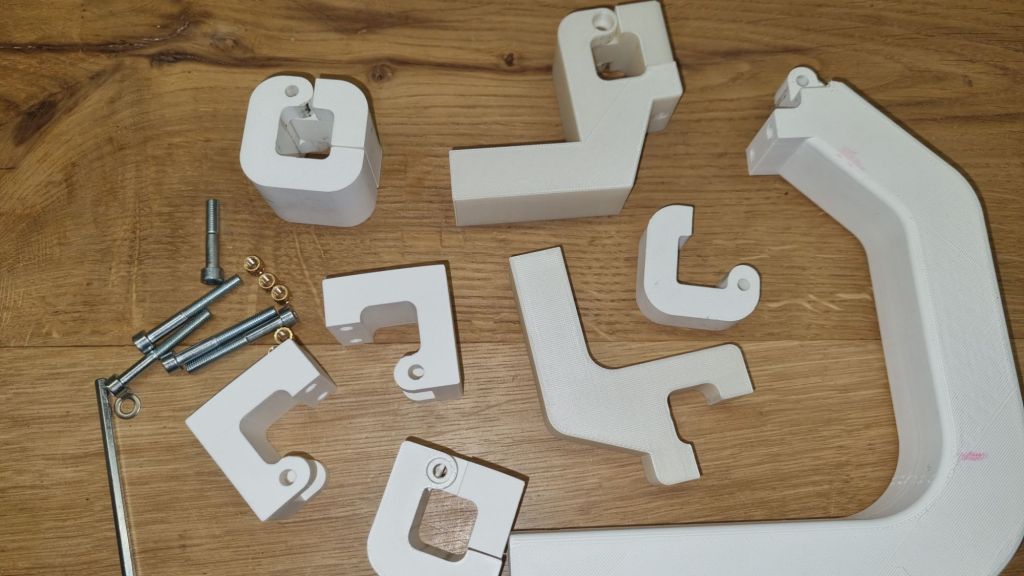
While working out the interior lighting I got a bit sidetracked. The lack interior light in Maggie annoyed me for quite some time. Therefore, I started on a small holder for an silicon enclosed LED strip (in warm white as my wife requested). From this idea it was a small step to a unique holder for the Rally dashboard needed for some upcoming events. The MGB has a 19,5×19. 5mm metal bar running behind the dashboard. Ideal to clamp on some accessories. Getting this right is a bit of an iterative process though.
All tests are done with PLA filament – but this isn’t suitable for long term use in a car. My printer does not have an enclosure. Therefore ABS is not recommended on the Bambu A1 but some posts on the user forum say ASA works. What should work well is PETG. It holds up to temperatures up to 85°C. This type of filament needs to be dried before printing and a filament dryer just arrived.
An unexpected trip to Northern Germany to visit my parents got stopped me finishing this however. Snow and ice are not really preferred conditions to drive a classic car. As the Mini has winter tires and I no modern car alternatives at hand – I set of on Tuesday evening at 7pm. It pays off to have a well maintained car and a late start. Roads were mostly empty and I could maintain an average speed between 120 and 130km/h (~70 to 80mph) on the Autobahn. 490km in 4.5h is very good for a 34year old 63bhp Mini Cooper.
Three things need to be addressed however. A) Wiper. Top of the list is the intermittent wiper solution. I don’t know how often I had to use the tip wipe. Worst part: i even tested the new circuit a while ago in the Mini. But as I had an idea for a clever wiring I did not permanently install it. I think I will also upgrade the washer like Martin did on his Mini that we used for Lejog.
B) Heating. Without the blower running cold air got in from somewhere behind the dashboard. With the blower running it was almost too hot. I believe that a dynamat isolation would help. And heated seats would be a premium creature-comforted upgrade
C) Noise. Not much that can be done here – besides maybe noise cancelling intercom headphones
The only thing I managed this weekend is to give the Mini a proper clean – removing all the salt and dirt from the 1000km round trip. I also need to do a check under the car shortly – there are some oil drips i found under the car and i had to refill more than one liter oil during the trip. But first – some business trips will keep me occupied






 Fixing C6622
Leave a comment