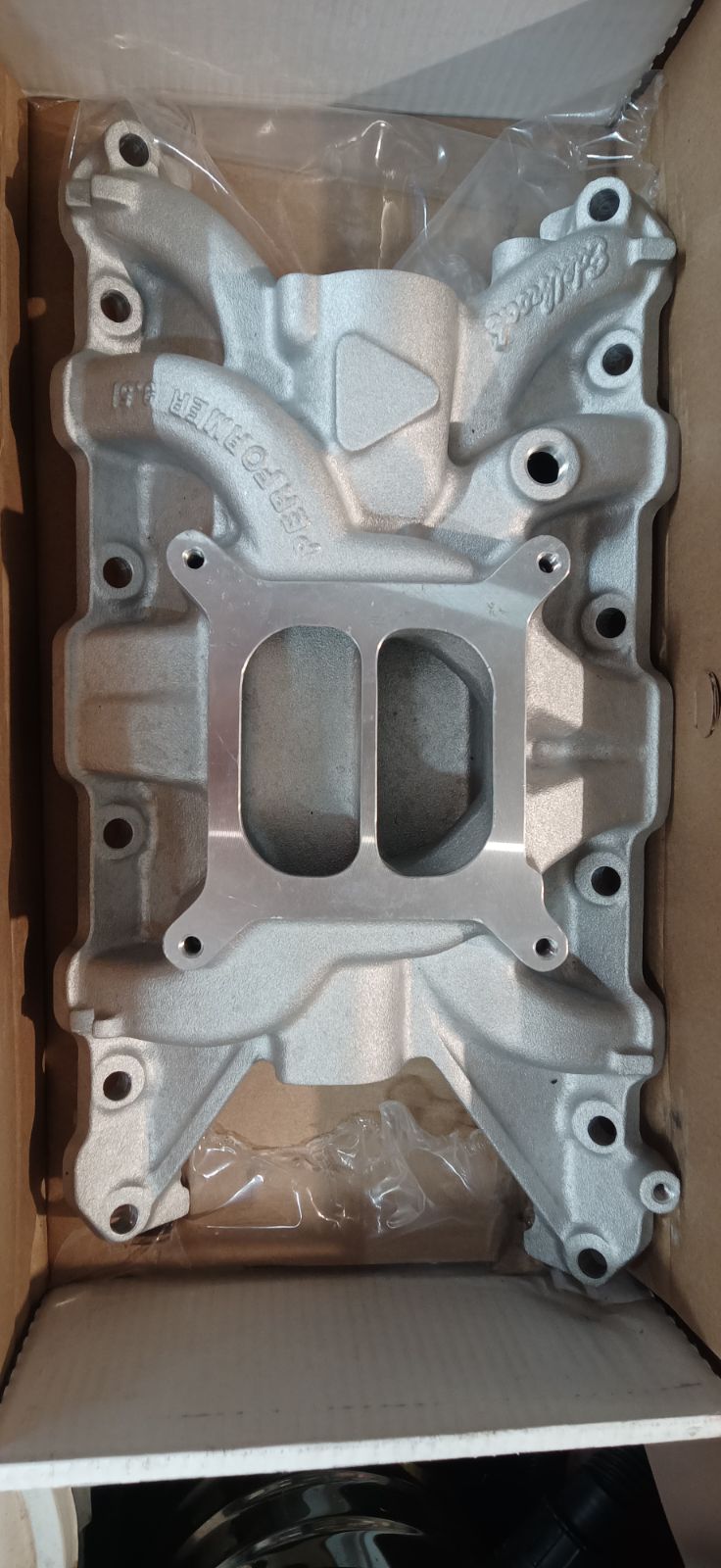
A seemingly innocent call with my friend Frank last Sunday added fuel to a fire burning in the back of mind. We talked about the awesome work that Franz is doing with his MGA build, 3D printing and changes in engineering due to AI. Somehow this brought us to speak about the Edelbrock Performer inlet manifold he just got for his Morgan Plus8. Of course that meant looking at potential benefits or disadvantages of using two SU HIF6 on the Edelbrock.
The Edelbrock manifold has a much better design compared to the standard SU inlet on the SD1. The two plenums change the way the two carbs send the gas mixture to the cylinders – eliminating the SD1 manifold’s restrictive log-style runner design, uneven cylinder-to-cylinder fuel distribution.
Compared to an Edelbrock four-barrel carburetor, dual SU HIF7s would deliver superior low-end drivability, smoother part-throttle progression, better hood clearance, and authentic classic character while still matching its total 500 CFM airflow capacity.
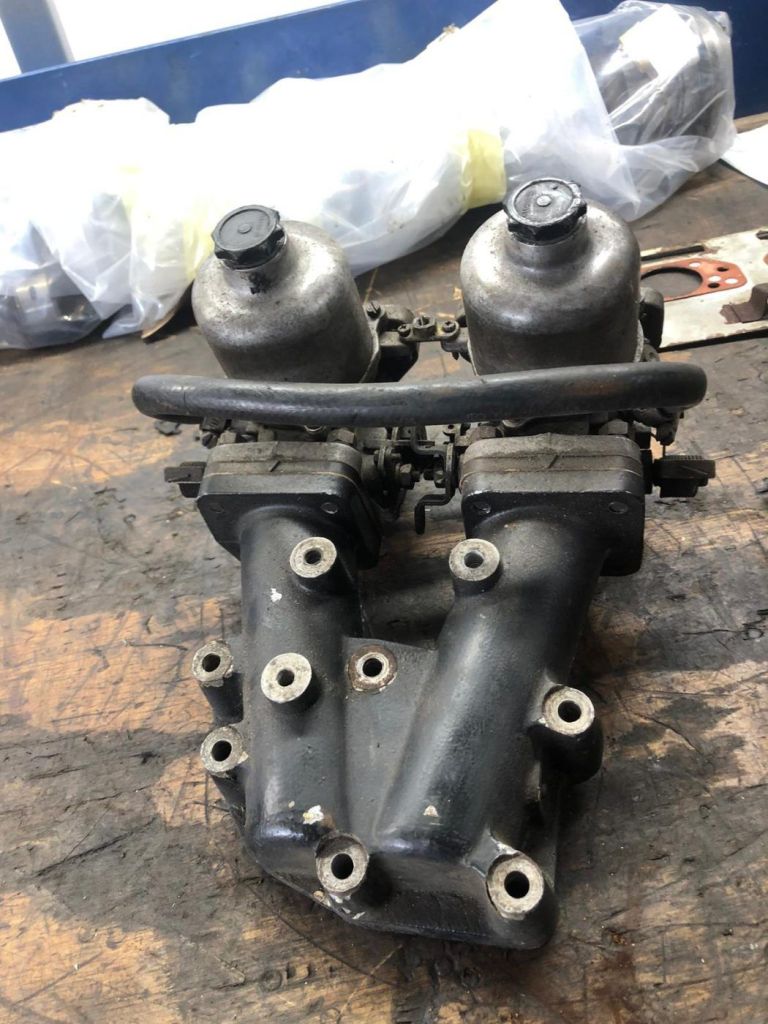
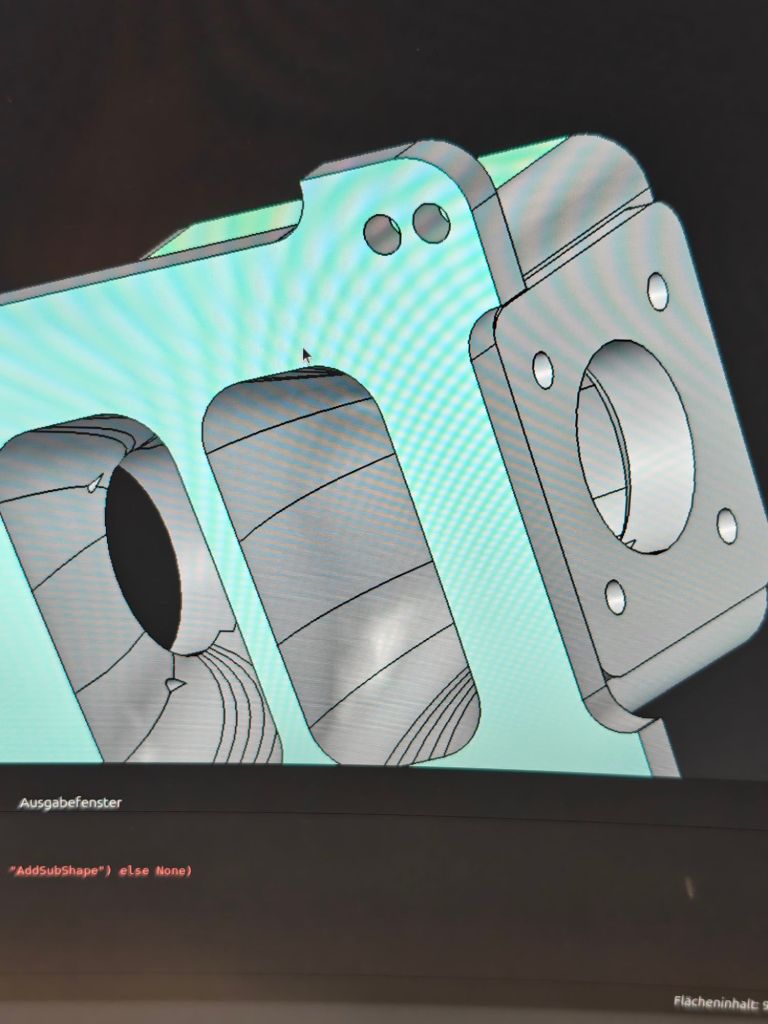
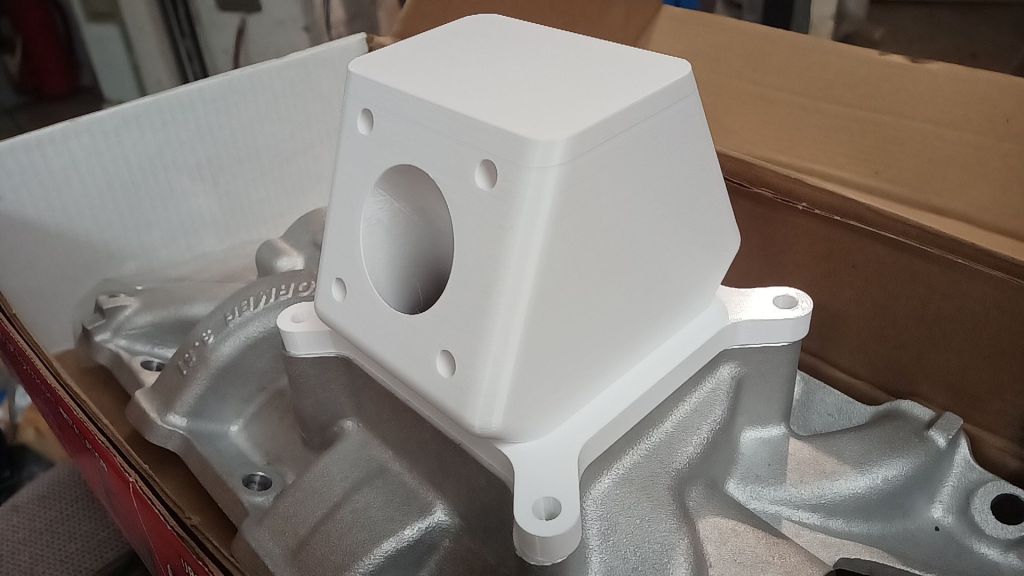
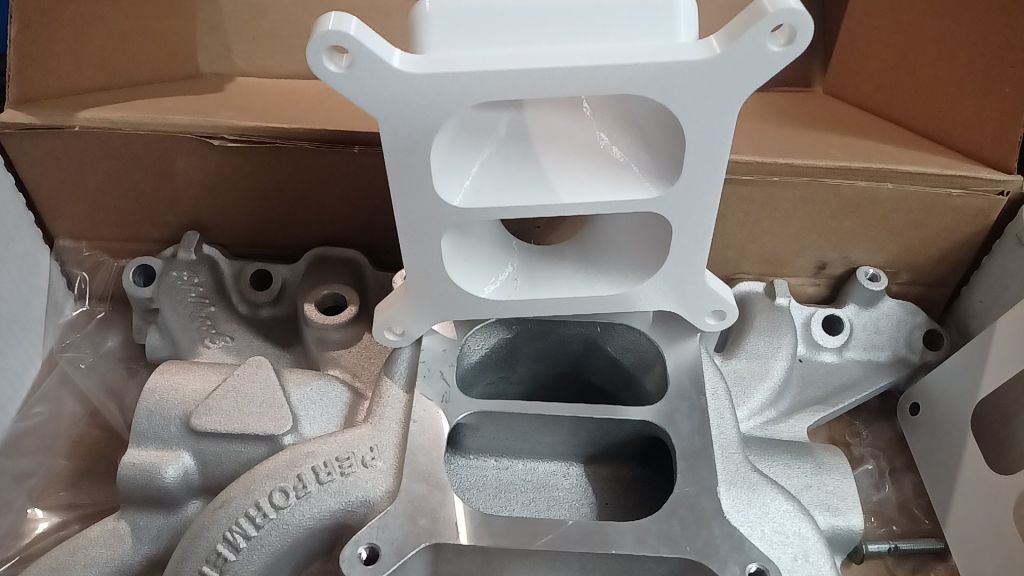
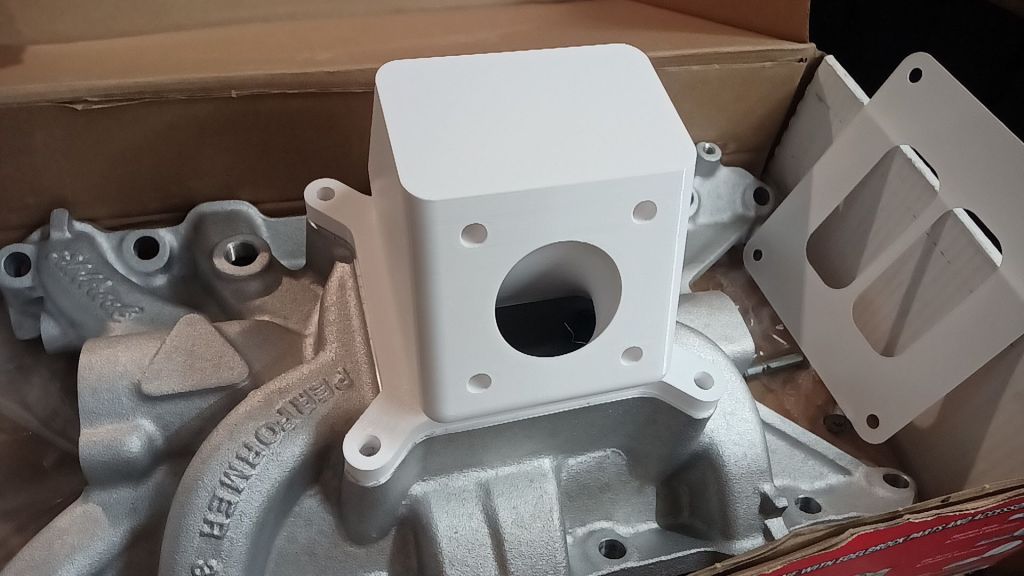
Our call ended with me already preparing a new Freecad sketch. Assisted by information provided through Google Gemini AI and a DXF of the Edelbrock flange Frank already created, it was a super easy task and prompt to get the SU carb mounting clock onto the Edelbrock flange. You see a test print below. But the Edelbrock builds up higher. Adding two SU is most likely not going to fit underneath the Morgan bonnet. And certainly Frank’s better half – Sandra – would disapprove of two large holes. It would never clear underneath a MGB bonnet as well. As I am on a business trip this week, there is little I can do now but I started working on a design based on the MGB V8 factory hose pipe adapter.
All of this reignited the fire I mentioned.
Mildred’s freshly rebuilt 18V581 is complete, dialed in, and running sweet. Given the healthy stack of invoices from thenmachine shop for boring, crank grinding, new pistons, and bearings, common sense says any engine conversion debate is over. The engine is finished, paid for, and ready to drop right between Mildred’s chassis rails.
Then there’s an engine dolly sitting underneath the workbench: a Rover 3.5L SD1 V8. It is my friends Michael’s old Morgan engine that covered almost 500k kilometres and a bit of a center-fold desire (for those people old enough to remember what that is)
Every time I look at the work on Mildred’s bodyshell, empty engine bay, the internal argument flares back up. On my left shoulder, the voice of reason points directly at the gleaming B-series:
“Be sensible. You’ve poured good money, sweat, and endless hours into this 18V. It runs, it bolts straight to the factory mounts, runs your CSI ignition without complaint, and gets Mildred driving next season.”
Then the devil on my right shoulder leans in with an angle grinder:
“Yeah, but imagine that V8 burble on an open back road. You’ve already solved the hardest piece of the conversion puzzle—that brand-new Mazda MX-5 gearbox with the V8 bellhousing sitting right next to the bench.”
Having the Mazda 5-speed (thank you Sven) at hand is already dangerous. It eliminates the traditional MGB V8 headache of shoehorning an unwieldy Rover LT77 casing into the transmission tunnel. The Mazda box is slim, shifts like a bolt-action rifle, lines its shifter up right where it belongs through the console, and the wiring harness is already planned with the Mazda reverse plunger switch and Smiths electronic speedo sender running down the tunnel. Drivetrain-wise, it’s practically sorted.
Which brings me back to the compromise: a two-stage migration.
Why make this an all-or-nothing gamble? While the engine bay is still stripped bare, on the rotisserie, and awaiting final paint, I can tackle the dirty metalwork right now. Dishing the inner wing flutes for header clearance won’t hurt the 18V—it simply leaves a bit of extra working room around the starter and distributor. Installing a double-UJ steering shaft now clears any future V8 manifold Welding a couple of discreet mounting studs for a future remote oil filter head, prepping the front panel for forward radiator brackets, and leaving a spare high-current fan feed in the harness costs very little today.
Once the chassis is prepped and painted, the rebuilt 18V581 drops straight in on bolt-in brackets. Mildred gets registered, passes TÜV(MOT), and hits the road next summer with the engine she was built to have. We enjoy the paid-for miles, bed in the suspension, and let the 18V stretch its legs.
And the Rover V8 and Mazda 5-speed? Those can be tackled later next year for a swap down the road when the itch for eight cylinders finally becomes impossible to resist.
Rhyme, reason, or a bit of both? Time to grab the measuring tape.


Leave a Reply